A tin becomes a plant pot
Take the label off, punch a few drainage holes in the base, and a clean food tin holds a herb or a small trailing plant on a kitchen sill. Nothing to buy.
 The Rework Room
42 Bramley Road, London, N14 4HR
Monday to Friday, 9:00–18:00 · Saturday, 10:00–16:00
[email protected]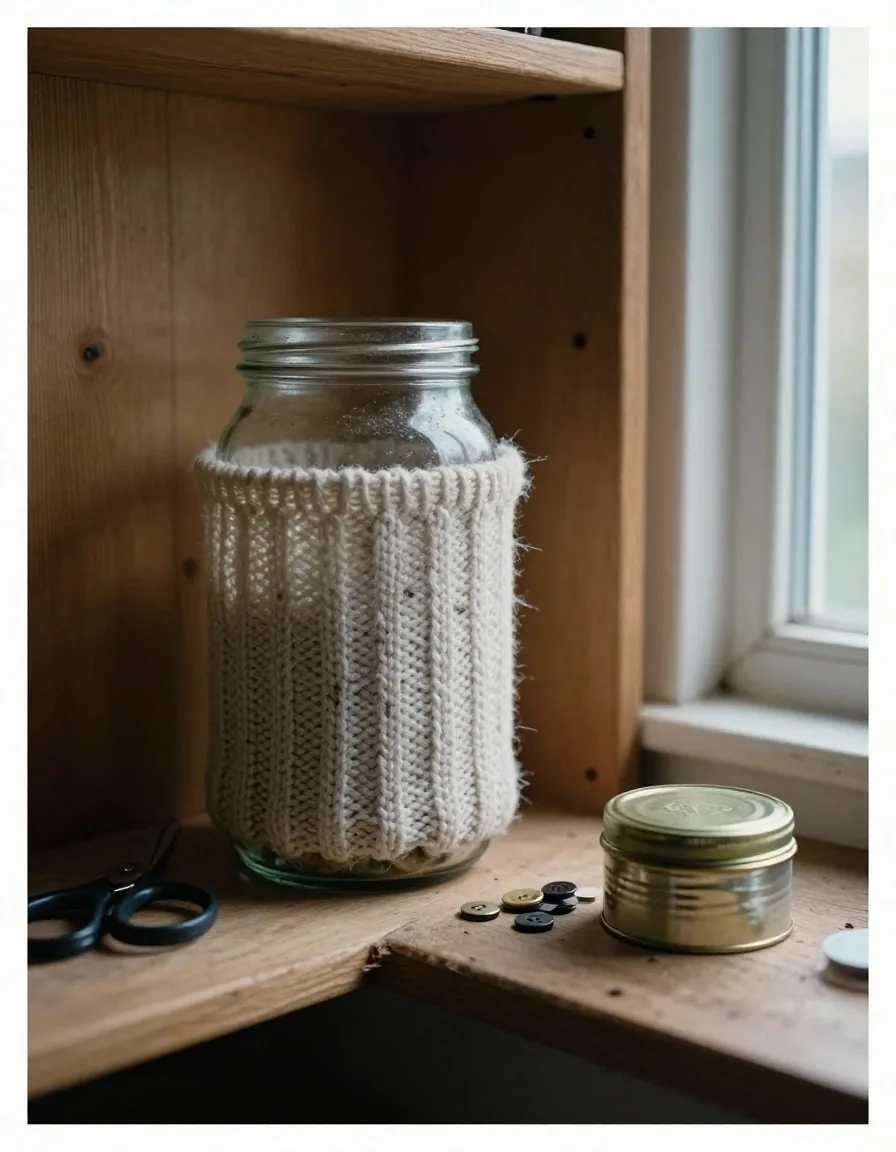
Weekend projects from your own cupboard
Upcycling is what you do before recycling. It is the step where you take something you would otherwise bin and give it a longer life, usually without buying anything new. Everything below starts with glass jars, tins, worn clothes, odd socks, and the kind of furniture that is fine except for one leg.
Each project below lists the tools you need at the top, so you can skip anything that calls for a workshop, a drill, or a free weekend.
Start here
Getting this clear first saves you effort later. The two are not rivals; they just happen at different points in an object’s life.
Recycling
Recycling breaks an object down and makes it into a lower-grade material. Glass becomes aggregate. Paper becomes lower-grade paper. The original thing is gone.
Upcycling
Upcycling keeps the object intact, or nearly so, and gives it a new purpose. A jar becomes a jar with a different job. A jumper becomes mittens. Nothing is ground up.
Why it matters
Upcycling saves more energy and more material than recycling does. It asks more of you too: you have to look at the object and decide what it could become.
Recycling is what happens when upcycling is not possible. That is not a failure, it is just not the best outcome available. If a thing still works, use it again first; if it is broken past saving, the recycling box is the right next step.
Glass jars
Glass jars are the easiest upcycling material in the house because they are already useful. Cleaned, with the label glue gone, they store dry goods, hold pens, work as vases, or replace plastic tubs in the fridge.
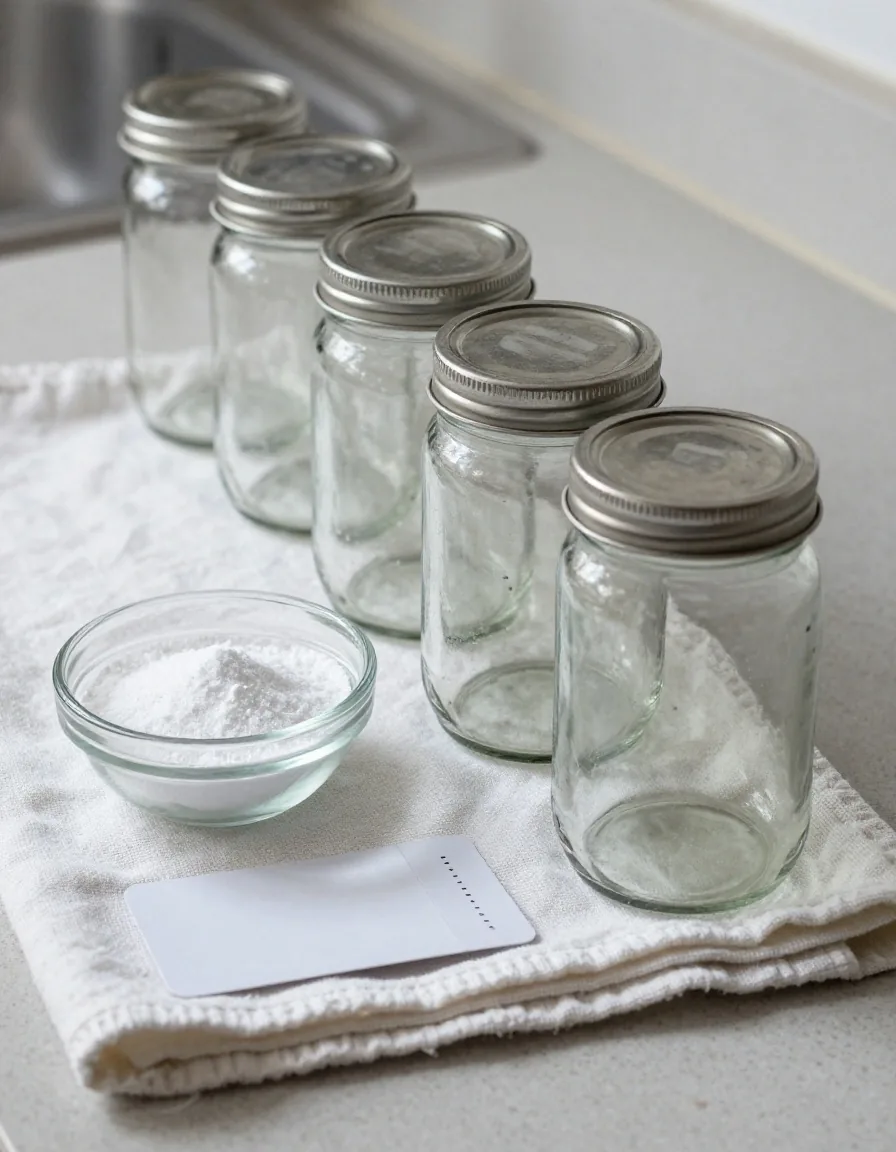
Soak the jar in warm soapy water, then scrub with bicarbonate of soda. That shifts most of it. For stubborn glue, a little oil or a scrape with a plastic card does the rest, and neither scratches the glass.
For dry storage
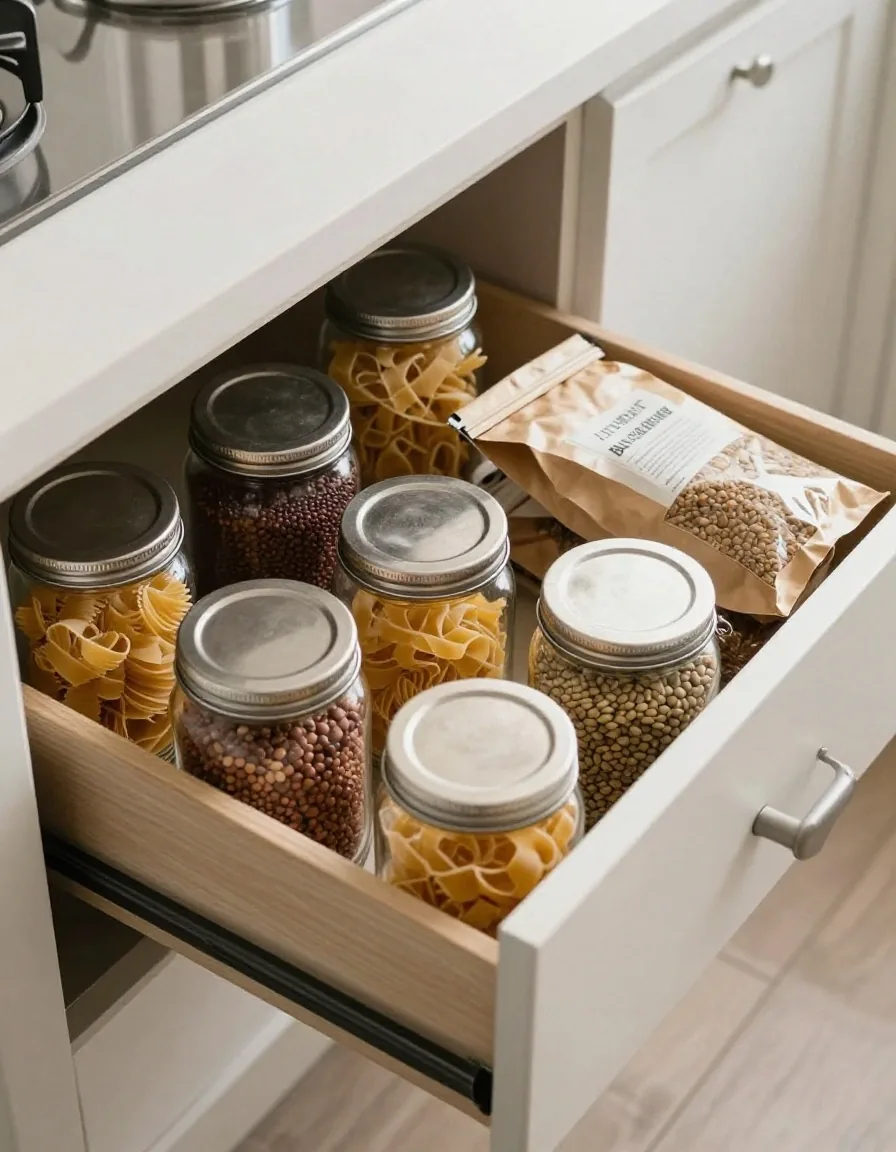
The lid matters more than the jar. Metal lids corrode over time, so keep dry goods in those and leave anything wet to containers with proper seals.
For spices
Keep the jars out of direct light, so seed and spice colour holds longer. A cupboard shelf beats the windowsill every time.
If you paint them
Painted jars look good on a shelf and wear badly if they are handled. Use matte craft paint, seal it, and do not put the jar in the dishwasher afterwards.
Pairs well with
Jars are the simplest way into plastic free food storage — buy loose, fill the jar, and the packaging problem disappears.
The order that works
A five-minute repair keeps a garment in its original form for years. Every step after it is a little more work and loses a little more of the original object — which is why the simplest option comes first.
Old clothes
Clothes are the largest category of reusable material in most UK homes, and the easiest to give a second life. A seam repair or a replaced button is faster than any full project, and it keeps the garment in one piece.
When a garment really is beyond repair, the fabric is still good. Worn jeans become patches, bags, or cushion covers. Jumpers become mittens or hot water bottle covers. T-shirts become cleaning rags, or the basis for a tote bag if you are patient with a sewing machine.
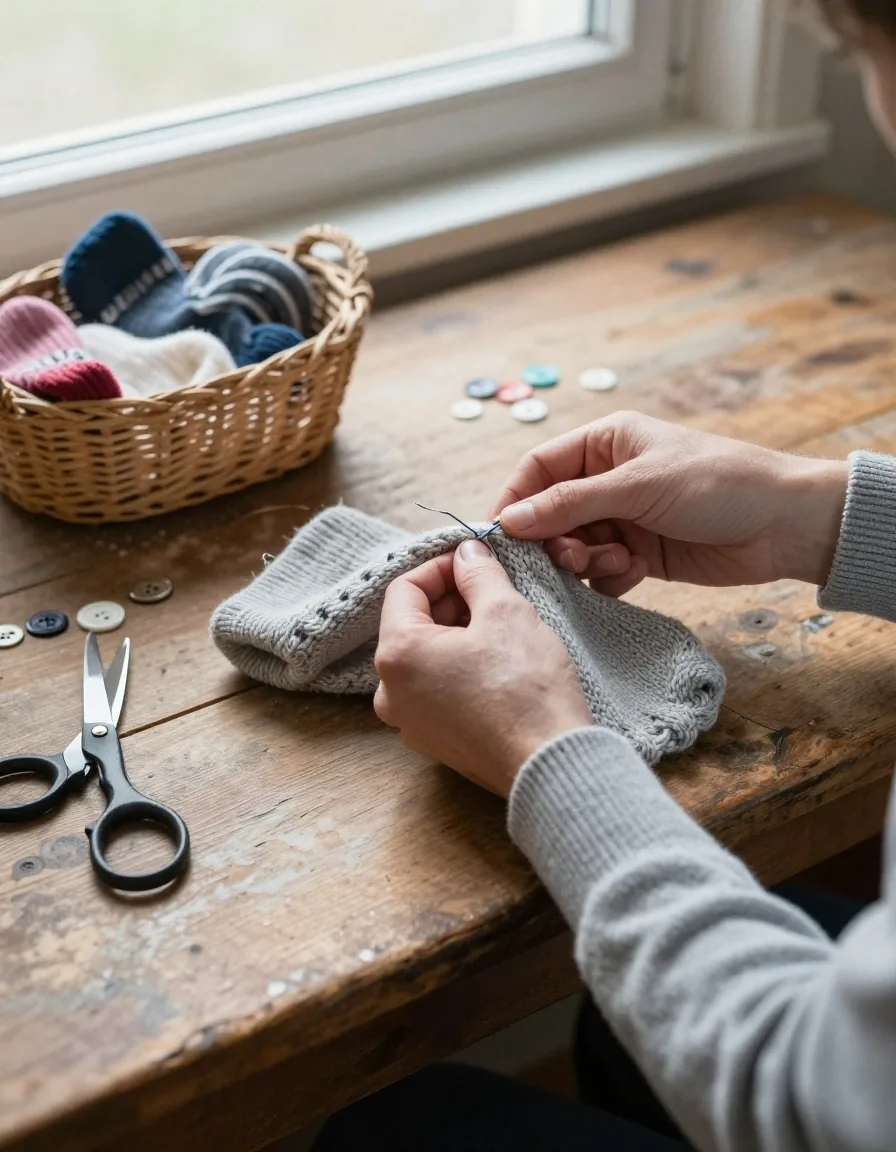
A basic needle, thread, and a pair of sharp scissors cover most of the projects on this site. A sewing machine opens up more options, but it is not required, and plenty of people never buy one.
Small and finishable
These are the ones people actually finish. A finished small project beats an unfinished big one, every time.
Take the label off, punch a few drainage holes in the base, and a clean food tin holds a herb or a small trailing plant on a kitchen sill. Nothing to buy.
One wooden crate fixed to a wall stud carries books or shoes. Two stacked make a small side unit. Skip it if you would need to buy brackets and a drill to begin.
Sand the broken edge until it is smooth, not sharp, and the mug holds pens, brushes, or plant markers. Fifteen minutes with a sheet of sandpaper.
Cut the sides down to the depth of your drawer and you have a grid for socks, cables, or baking tins. Reusing everyday items without a single new purchase.
They stack, they seal, and they hold a batch of soup or sauce better than a new plastic box. Just label the lid so nobody plays freezer roulette.
A retired toothbrush reaches tile grout, tap bases, and the thread of a thermos. It sits neatly with the eco friendly kitchen cleaning kit.
Some things never need a project at all. The trick is having somewhere to put them, so a good habit does not quietly become clutter. Keep what you will genuinely use in the next six months and pass the rest on.
A drawer of saved jars is useful. A cupboard of saved jars is a problem. If you are not sure whether you will use something, set a date — and if it is still unused after that, it goes.
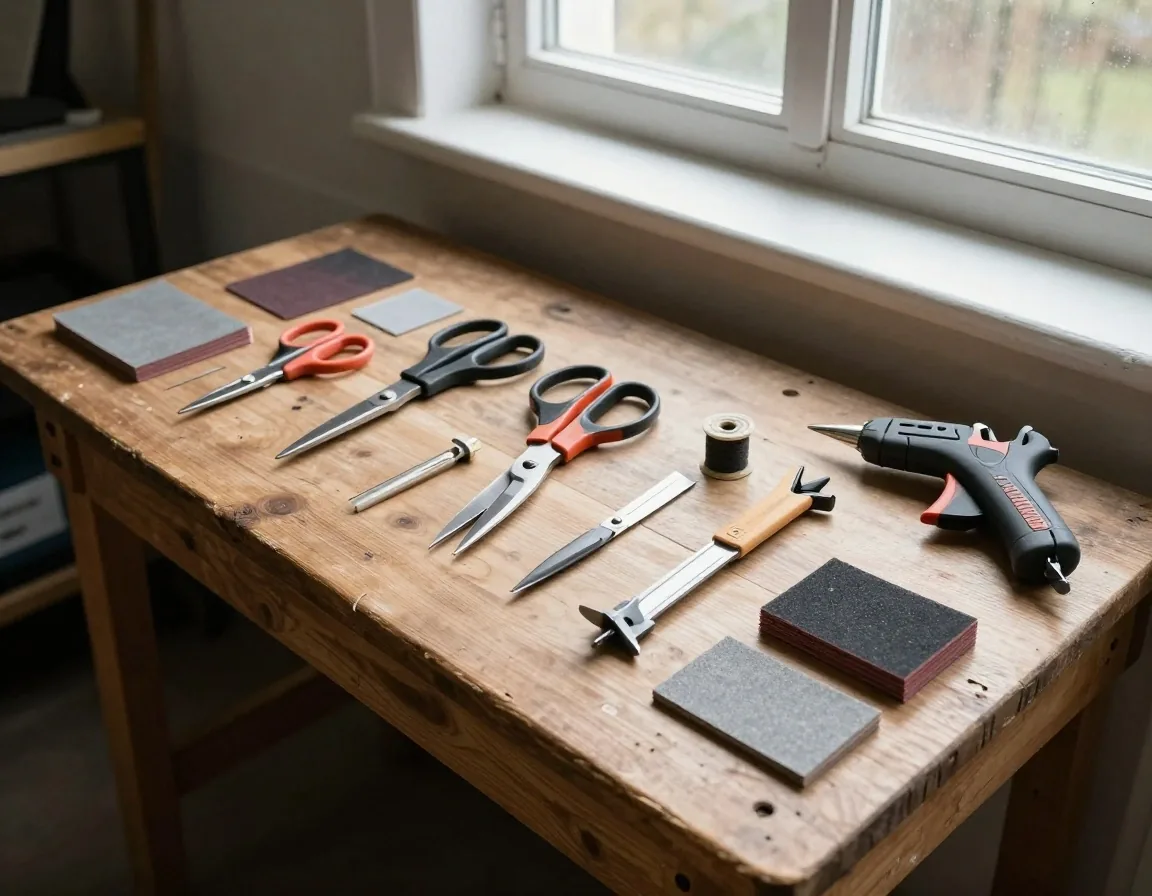
Tools
None of these are expensive, and all of them last. Keep the kit in one place so you can start a project without turning the house over first.
Sharp scissors, a craft knife, and sandpaper handle cutting, trimming, and edges.
A needle, thread, and a couple of clamps turn most fabric projects into an evening.
A hot glue gun is for craft work, not for repairs that have to bear weight.
Skip specialist tools until a project actually needs them. A sewing machine is worth buying if you do more than a few projects a year, not before.
A drill and bits are useful on wood, but leave powered tools to proper guidance while you are learning.
Sourcing
Your own home comes first, and it is usually enough. When you are after one specific item, these are the places to look.
Empty jars, tins, worn clothing, odd socks, broken furniture. Almost every project on this site starts here, which is the point.
Good for a specific item — a wooden crate, a cotton shirt, a plain frame. Buy with the project in mind, not on speculation.
Both are useful when you are hunting one particular thing and do not mind waiting a week or two for it to be offered nearby.
A good source of dry goods for the jars you have already cleaned, and a practical way to buy in bulk without new packaging.
Reupholstering a sofa, rebuilding a chair, refinishing a large piece of furniture. If you have the space, the tools, and the time they are genuinely rewarding. If you do not, they sit in the hallway for six months and quietly stop being a project.
Pick something you can finish in an afternoon with what is already in the house. A finished small project beats an unfinished big one, and the second one teaches you what you actually enjoy making.
Questions
The three things people ask most often when they are new to this. If your question is not here, send it over and it may end up on the page.
No. Most projects on this site can be done by hand with a needle and thread. A machine opens up more options and makes larger pieces faster, but it is not a starting requirement.
Usually, if the object is still usable. Upcycling keeps more material and energy in play. If something is broken beyond repair, recycling is the right next step rather than a fallback you should feel bad about.
Your own home first, since that is where most of the material already is. For one specific item, charity shops, Freecycle, and Olio are good places to look without buying new.
Keep going
Send us the before and after, and tell us what it cost you — usually nothing. Reader projects are how this page keeps growing, and they are how other people find the confidence to start.
42 Bramley Road
London, N14 4HR
United Kingdom
Mon–Fri 9:00–18:00
Sat 10:00–16:00
New to all of this? The low waste home guide walks through the first changes room by room.