The Rework Room The Rework Room
Kitchen guide

Kitchen swaps that survive a real week

Most plastic-free food storage advice assumes a tidy cupboard. This one starts with a half-used jar of pesto and a drawer of lids that no longer fit. Everything below is tested in a normal UK kitchen.

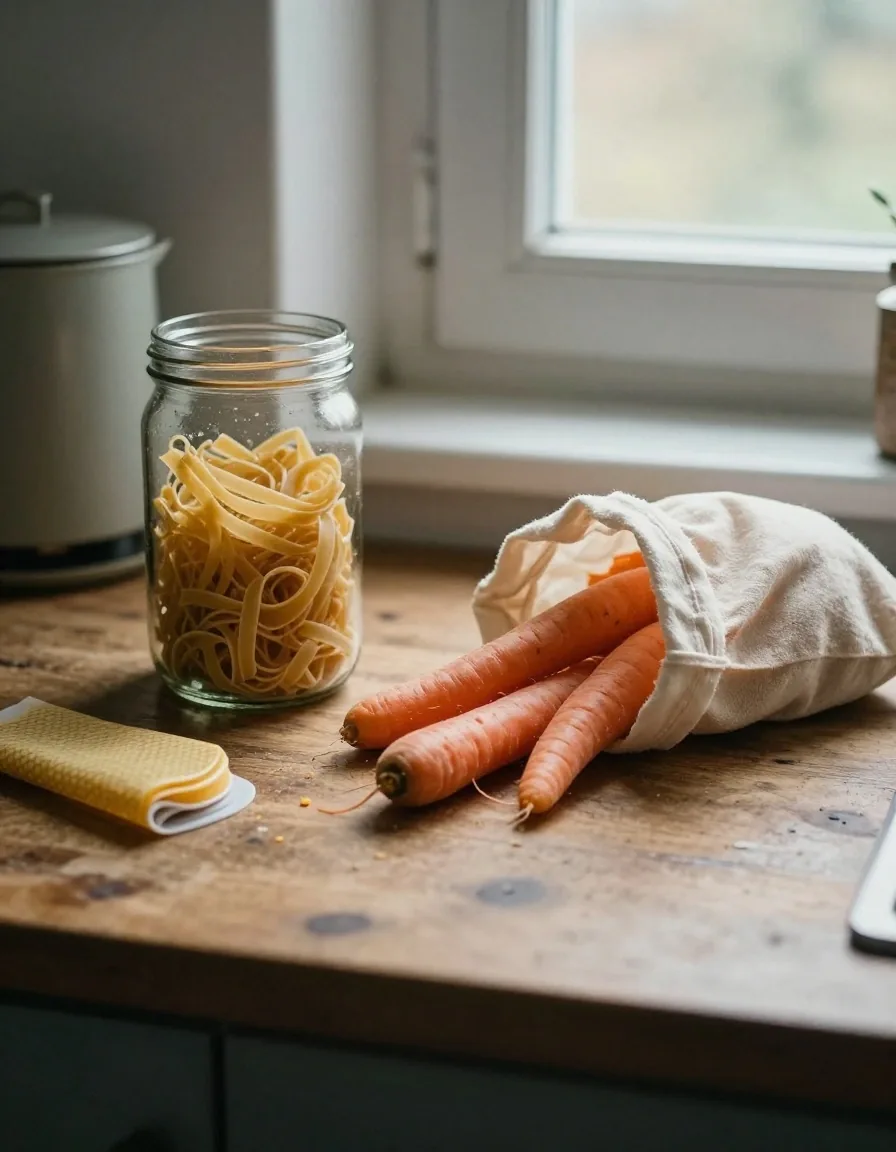
Reused glass jars, a beeswax wrap, a cotton produce bag and a silicone lid laid out on a kitchen workbench
A normal week, unpacked

What this page covers

Plastic-free alternatives for the parts of a kitchen that actually get used

Plastic-free kitchens are usually pictured as tidy jars and linen cloths. Real kitchens have half-used ingredients, a drawer of mismatched lids, and a fridge that runs colder at the back than the front. The swaps below hold up to a normal week, including the ones that come with catches worth knowing about.

It is written for UK kitchens — supermarkets, high street shops, or online, and nothing here needs a specialist retailer. If you are starting from zero, the zero waste starter kit arranges the same swaps into a first-month order.

Storage first

Containers before wraps. Batch-cooking households need boxes; lunch-making households need cloth.

Wash right

Hot water shortens the life of wax wraps and cotton bags. Cool water and a line dry last longest.

Keep what works

Some kitchen plastic is genuinely hard to replace. Reuse it long before you replace it.

Food storage

Glass, silicone, and what actually fits

Pick the format that matches your cooking, not the one that photographs well.

Glass containers with real lids

Glass is the workhorse of a plastic-free food storage cupboard. It stacks, most of it goes in the oven, and it does not hold onto smells the way plastic does. The catch is weight and the lid — lids crack, go missing, and stop fitting after a few years. Matching sets with replaceable lids are worth more than sets that simply look nice together.
Silicone lids and stretch covers

These work well for bowls and cut fruit. They are not a full replacement for cling film if you are wrapping a sandwich or covering a pan on the go. Silicone is more durable than plastic and lasts longer, but it is still a synthetic material — a good replacement for some uses and a poor one for others. Buy two sizes, not a full set.

Wax wraps, within their limits

Wax wraps suit cheese, sandwiches, cut vegetables, and covering a bowl. They do not work for raw meat or fish, they do not belong on anything hot, and they are not a freezer solution. Knowing the edges of the job makes them last longer and stops you blaming the cloth when it is being asked to do something it cannot.

A household that batch-cooks on Sunday needs containers. A household that builds lunch at 7am needs wraps and small boxes. Buying for both on the same day is how drawers fill with things nobody reaches for.

See the low waste home guide

Reusable produce bags

Easy to buy, easy to forget at home

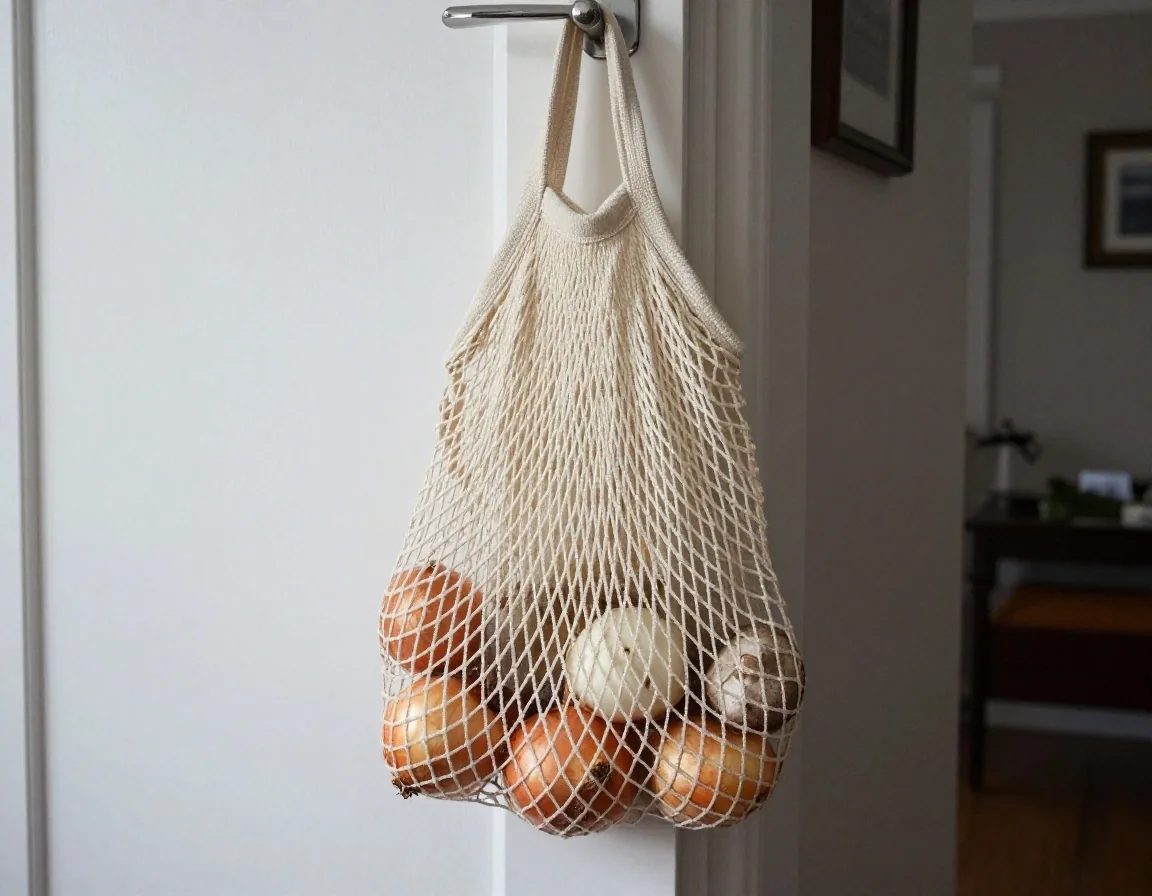
The fix is not a better bag, it is placement. Keep them where you will see them: in your bag, in the car, or hanging by the door. A set of three or four in different sizes covers most of a weekly shop, and a set you remember beats a perfect set sitting in a drawer.

Fabric
Most are cotton or a light mesh, and both work. Cotton is heavier and holds moisture; mesh is lighter and lets produce breathe. A mix of both covers more shopping than six of the same bag.
What suits what
For loose mushrooms or herbs, mesh is better. For a kilo of onions or a bag of potatoes, either works. Damp greens in a cotton bag will sweat, so let them air once you are home.
Washing
Every few weeks, especially after something damp has been in them. A quick rinse and a line dry is usually enough, and mesh dries much faster than cotton.
A cotton produce bag and a mesh produce bag hanging by a door beside a canvas shopping tote
Where they get left is the whole problem
Beeswax wraps

They are not broken. They are warm.

Beeswax wraps are cotton cloth coated in beeswax, sometimes with jojoba oil or tree resin. They are slightly tacky when new and soften with the warmth of your hands, which is exactly what makes them stick. A wrap that has gone sticky on a warm afternoon is usually just warm — put it somewhere cooler and try again.

What they cover

Cheese, cut vegetables, sandwiches, and the top of a bowl. They press into shape and hold without tape or an elastic band.

What they cannot

Raw meat and fish, anything hot, and long-term freezer storage. Use a container for those jobs and keep the cloth for the rest.

Care that adds a year

Cool water and a mild soap, then air dry. They last about a year with normal use, less if they meet hot water. When they stop sticking they can be refreshed in a low oven or composted.

Cleaning

Cutting out the plastic bottles

Eco friendly kitchen cleaning comes down to a short list of things that work, plus cloths that are washed often. You do not need a different bottle for every surface in the house.

Sprays and refills

One all-purpose spray

Concentrated cleaners and refillable spray bottles cover most kitchen cleaning. One all-purpose spray handles counters, sinks, and the hob. A separate bathroom cleaner is worth having, but you do not need a specialist product per surface. Buy the concentrate, keep the bottle, refill it.

Vinegar and bicarb

Useful, with boundaries

White vinegar handles limescale and glass, but not stone worktops or anything with a seal you would rather keep. Bicarbonate of soda is good for scrubbing and for absorbing smells in the fridge. Neither is a miracle product and neither replaces a decent cloth.

Cloths

They matter more than the bottle

A few good microfibre or cotton cloths, washed regularly, replace kitchen roll for most jobs. Keep one for spills, one for surfaces, and one for the floor if you mop by hand. Replace them when they stop absorbing, not when they look tired.

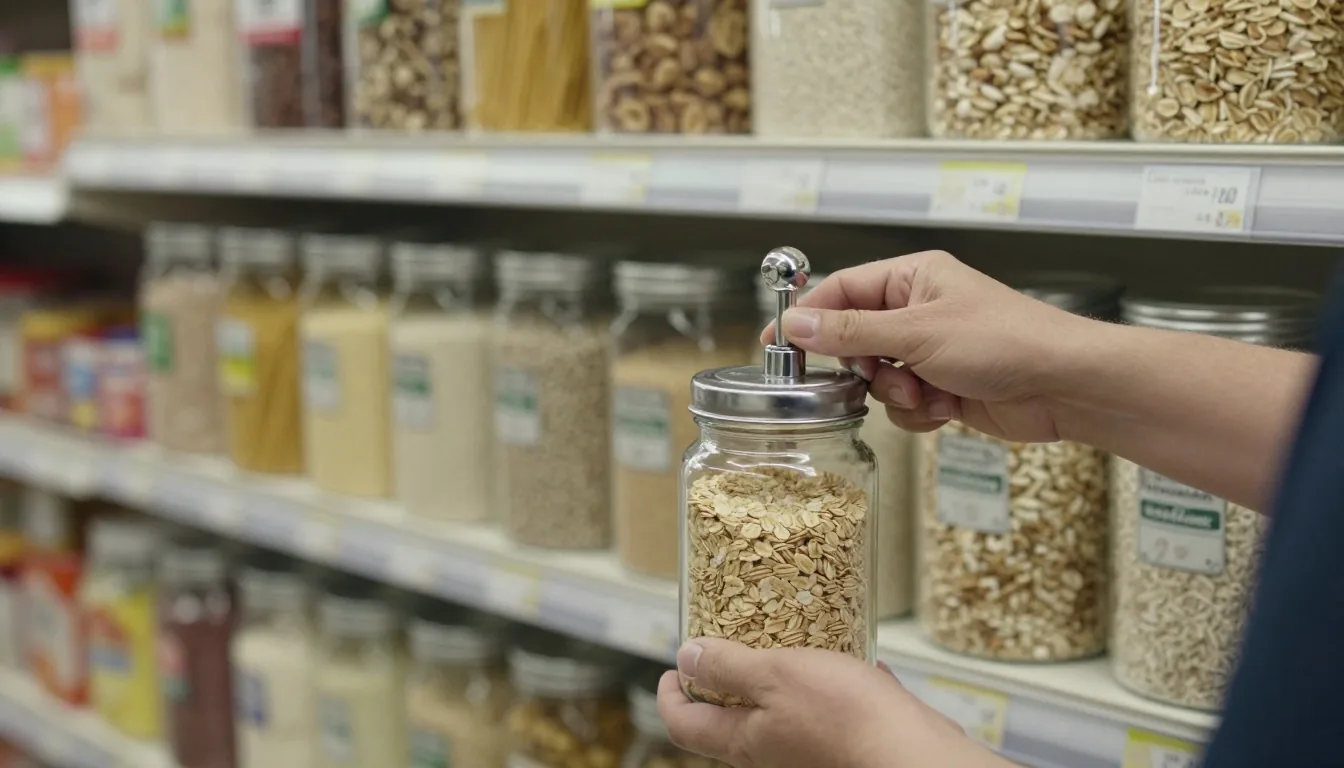
Steel gravity bins of rice, pasta, oats and nuts at a refill shop counter with a glass jar being filled

Buying food

Without the packaging, where it is easy

The easiest protein, dairy, and dry goods to buy without packaging are the ones sold loose or by weight: bread from a bakery counter, cheese from a deli, meat from a butcher. Most UK supermarkets have at least one of these counters, and they will usually let you use your own container if it is clean.

Dry goods are harder. Bulk bins are rare in supermarkets and common in independent health food shops and refill shops. If you have one nearby, it is the best option for rice, pasta, oats, and nuts. If you do not, large paper or cloth bags from the supermarket still beat small plastic ones, though not by much.

The rule that saves the most waste is simpler than any of this: buy what you will cook this week, and plan the meals around it. It is one of the few sustainable lifestyle habits that shows up in the bin bag immediately.

Where plastic still wins

Reuse it long before you replace it

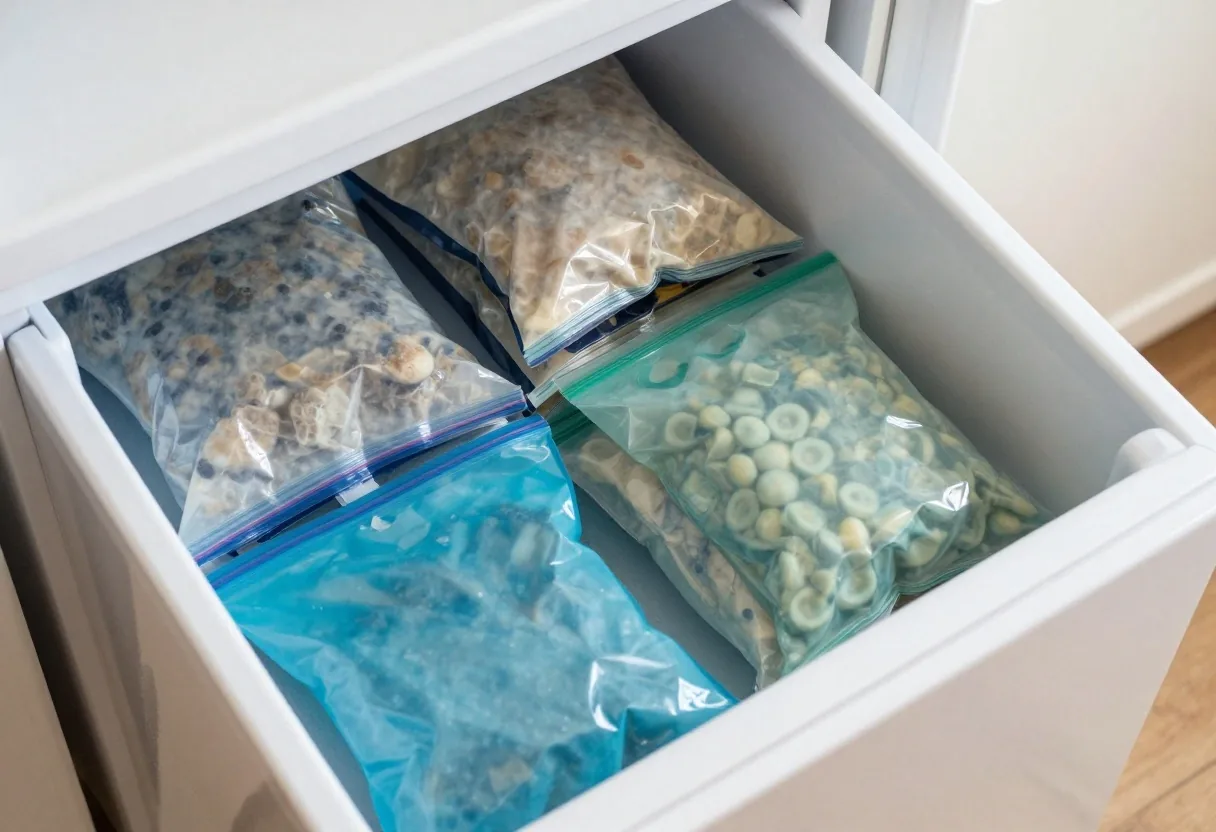
Some kitchen plastic is genuinely hard to replace: freezer bags for portioning, vacuum-sealed packaging for meat, and anything that needs to be waterproof and flexible. Pretending otherwise leads to worse outcomes — spoiled food and damaged equipment are both bigger losses than a zip-lock bag.

Where plastic is unavoidable, the goal is to buy it once and use it many times. Freezer bags can be washed and reused. Zip-lock bags last longer than people expect. Silicone bags replace some of them, though they are heavier and pricier.

Reused freezer bags and silicone bags holding portioned food in a home freezer drawer
Was it clean? Then it can go round again

Common questions

The catches people ask about

Short answers to the three questions that come up most when someone swaps their kitchen storage for the first time. If a swap turns out not to work in testing, it gets said here plainly.

How long do beeswax wraps last?

About a year with normal use, sometimes less if they are washed in hot water or used on hot food. Cool water, a mild soap, and a line dry are what keep them going.

Do reusable produce bags need washing?

Yes, every few weeks. Mesh bags dry fast, cotton ones take longer, and both benefit from being aired out after a damp shop. A quick rinse is usually enough — they are not handling raw meat.

Is silicone better than plastic?

It is more durable and lasts longer, but it is still a synthetic material. Silicone is a good replacement for some jobs — bowl covers, baking mats, stretch lids — and a poor one for others. Buy it for the jobs it actually does.

Where to go next

Start with one shelf, not the whole cupboard

Pick the one draw or shelf you open most often, swap what is in it, and live with the result for a fortnight before buying anything else. That is how most of these changes stick, and it keeps the mistakes cheap. When you have something that worked — or something that did not — we would rather hear about it than guess.

Tell us what worked for you

Notes from real kitchens shape what gets tested next. Send a short message about the swap you tried, the one that failed, or the one you are still unsure about.

Go to the contact page
The Rework Room
42 Bramley Road, London, N14 4HR
Opening hours
Mon–Fri 9:00–18:00 · Sat 10:00–16:00