
About this site
Who writes The Rework Room
A small editorial team in London writing about zero waste living and upcycling, mostly from our own kitchens, cupboards and back rooms. No product shop, no paid placements — the work is checked, dated and corrected in the open.
How we work
House rules we don't break
We write for households that want to waste less, not households that already have. That means plain copy, honest uncertainty, and a visible date on anything that could go stale.
See the low waste home guideWritten from experience
Most guides start as a question somebody on the team actually had, then get tested in a normal kitchen before they get published.
Checked at source
Collection rules come from council websites. Care instructions come from manufacturers. Where we only have our own experience, we say so.
Reviewed yearly
Guides get re-read about once a year, and sooner if a rule, a product or a swap changes. The date on a guide is the last review date.
Who we are
Two people, one shared irritation
The site was started by two people who got tired of zero waste tips for beginners that assumed a garden, a big freezer, a farmer's market within walking distance, or a council with the same collection rules as everywhere else. That's not most UK households. Most of us are in a flat or a terrace, on a normal income, with a bin day that doesn't collect half of what a magazine thinks belongs in it.
So the guides here are written for that setup. If a swap needs a chest freezer, we say so and suggest another route. If buying in bulk is cheaper per gram but trips a bus journey with two bags, we say that too. The sustainable lifestyle habits we write about are the ones that survive a busy week, not the ones that look good in a photo.
We're not a company with a marketing department, and the person writing a guide is usually the person who tested it. That's slow, but it's the only way we can stand behind the copy.
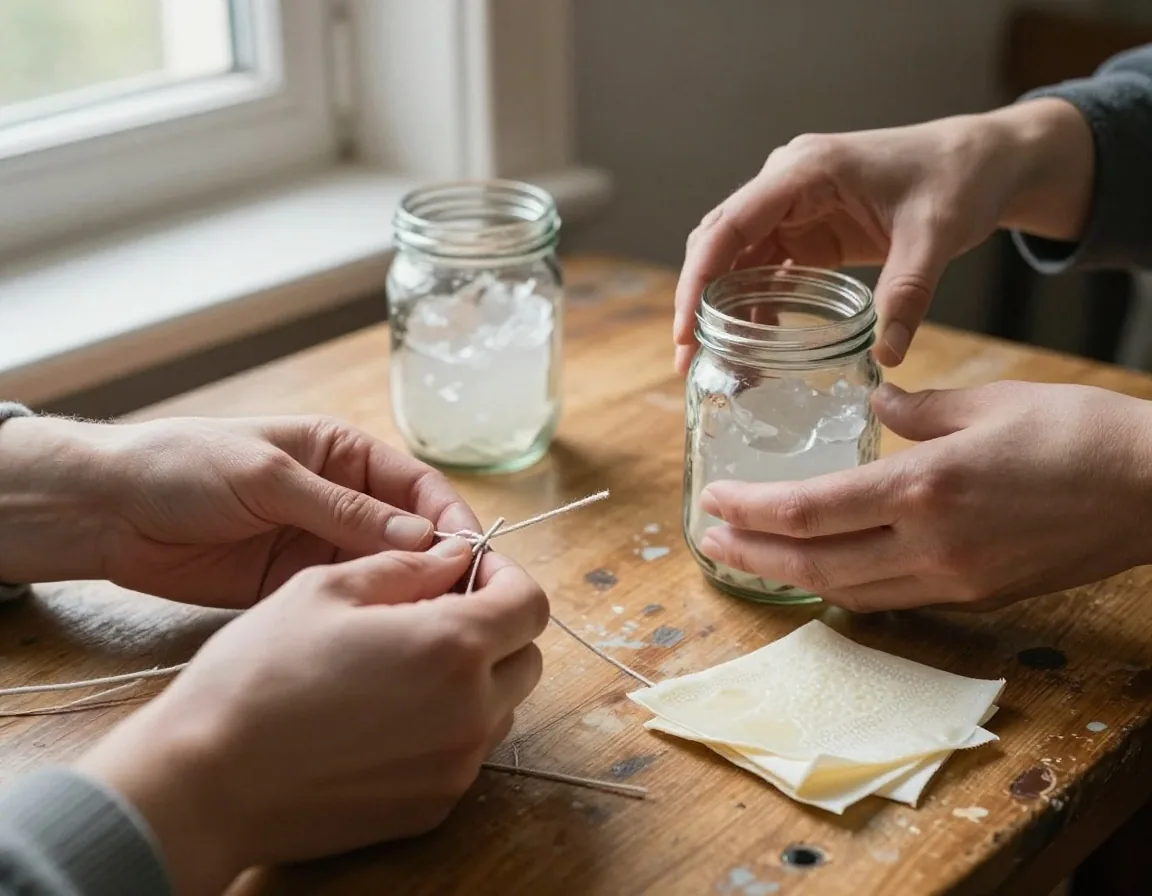
Most of what we publish has been tried at a table like this one, in a normal week, before it made it onto the site.
No figures we can't stand behind
We don't cite studies we haven't read, and we don't invent numbers.
If a claim in a guide depends on a council, a manufacturer or a UK organisation, we link the source we actually read. If we can't verify something, the guide says it's unresolved — and readers often know the answer first.
How guides are researched
From a question in the kitchen to a published guide
Every guide runs through the same four checkpoints before it's live, and none of them are skippable. It's the reason guides sometimes take weeks to appear, and the reason corrections land fast once readers write in.
Step one
The question comes first
Why did the beeswax wrap go sticky? Where do soft plastics actually go in the UK? Does buying in bulk beat the supermarket on price? If none of us have asked it, it isn't a guide yet.
Step two
Tested in a real home
We try the swap in a normal kitchen and keep the weeks where it's inconvenient. Simple upcycling projects go on a real shelf too, so we know how they hold up.
Step three
Checked against sources
Council collection rules come from council websites. Care instructions come from the maker. A handful of UK organisations who track packaging and waste help us sanity-check what we can't test ourselves.
Step four
Dated and kept
Every guide carries the month it was last reviewed. When a rule changes, or when readers tell us a swap doesn't work, we edit the live page rather than hide it behind a new one.
What we don't cover
Fewer guides we're sure about, not more we can't stand behind
The list below is short on purpose. It keeps the site useful and stops us pretending to know things we don't.
Brand rankings and paid product reviews
No commissions, no sponsored slots, no score tables we'd need to defend. If a guide mentions a specific item, it's the version we actually use in the test kitchen.
Universal claims about what's "better"
Whether a plastic free alternative wins depends on your council, your storage, and your household. We write the version that works in most UK flats and say when it won't for you.
Perfect-homes zero waste
Nobody's bin is empty. The site is for households trying to waste less — including the messy weeks when a swap is more effort than it's worth.
Anything we can't test or verify
That includes figures we can't trace, claims copied from a brand's own page, and swaps that only work if you live somewhere with different infrastructure. If it can't be checked, it doesn't run.
Keeping guides current
Reviewed every year, corrected the moment something changes
A yearly re-read is the baseline, not the ceiling. If a council changes what it collects, if a product goes off the shelf, or if a swap turns out to underperform in a damp flat, the page gets updated before the next review date comes round.
Look for the date under a guide's title. That's the last time we read the guide end to end and either confirmed it or fixed it. We don't stamp a fresh date on an old page to look recent.
Corrections from readers are the single most useful thing that lands in our inbox. If something in a guide contradicts what you see at your kerbside or in your own kitchen, write in and we'll check it against the primary source before we touch the copy.
Editorial independence
The whole business model, in plain terms
We don't take payment for coverage. We don't run sponsored posts. If we ever link to a product, it's because it's the version we use at home or in the test kitchen — not because anyone paid for the placement. That includes the reusable bags, wraps, tins and jars that show up across our guides.
The site's running costs are covered by advertising. That's the whole business model. It's also why the guides aren't behind a paywall and why we don't ask you to sign up before you can read about plastic free food storage or how to upcycle glass jars.
If we ever take money that changes what we write, the change would be printed here first, in this section, before it took effect. So far that hasn't happened, and there are no plans for it to.
Get in touch
Questions, corrections and project ideas all land with us
The contact page has the email and the address. We try to reply within a few days, though it can take longer when a guide is mid-update. We read everything, even when we don't reply.
Email [email protected]
Address 42 Bramley Road, London, N14 4HR, United Kingdom
Hours Monday to Friday, 9:00–18:00 · Saturday, 10:00–16:00
Common questions
What readers ask us most
Do you accept guest posts?
Do you sell anything?
How can I help?
Where should a beginner start on the site?
Ready when you are. Start with the guide that matches your week.
If you're just starting out
The zero waste starter kit walks through the first swaps with the least disruption to a normal shopping week.
Read the starter kitIf you already know the basics
Go straight to the upcycling projects, or the kitchen swaps if you're reworking storage and cleaning.
Browse upcycling projects